
FMCG supply chains are being tested like never before. Current global volatility has led to the closure of some shipping routes, forcing freight to be rerouted due to geopolitical risks and congestion, materially increasing lead times and transport costs.
KPMG’s 2026 supply chain view notes that the conversation is shifting beyond resilience alone toward “Total Value”: combining service, cost, speed, customer experience, and performance in a single operating model.
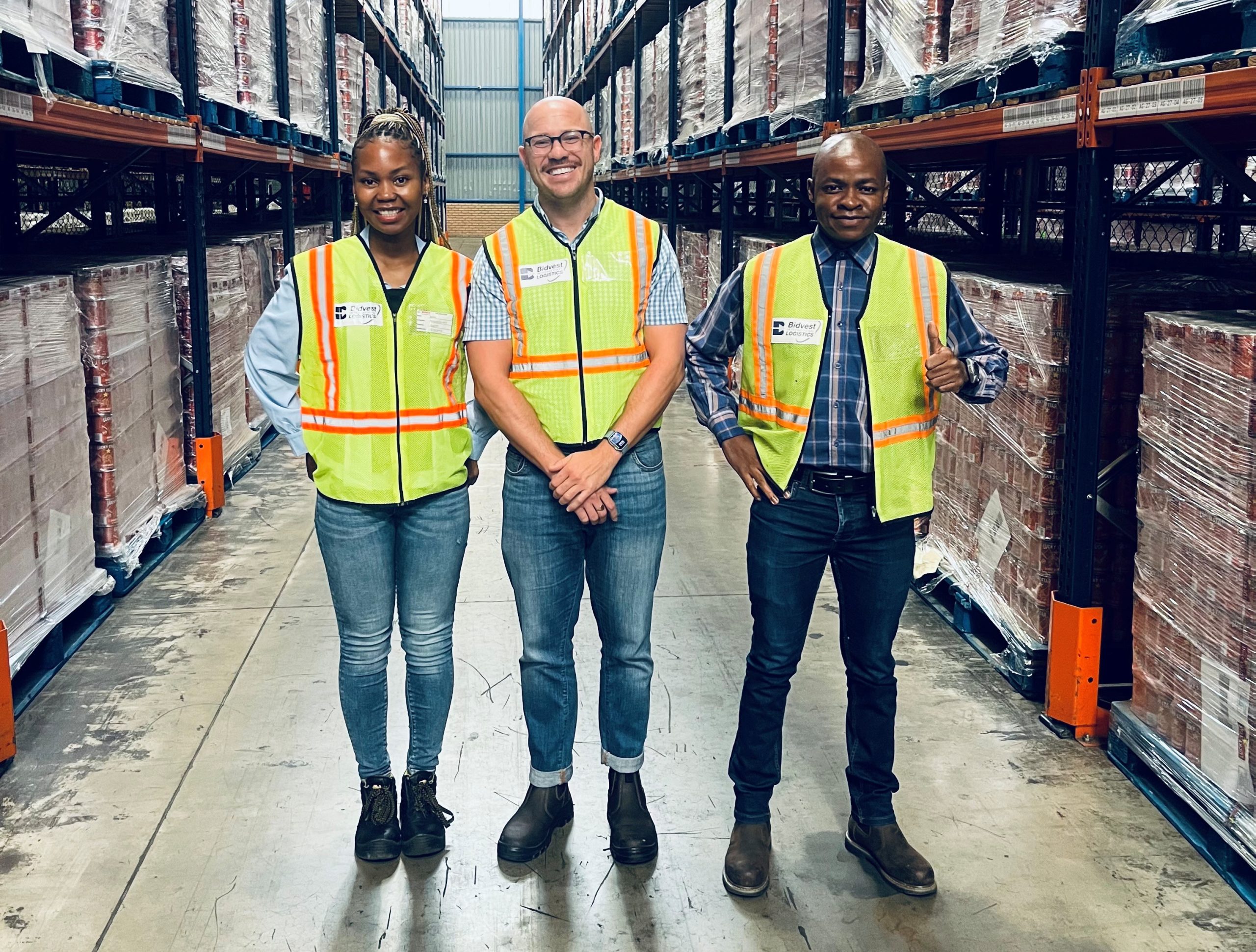
Against this backdrop, Bidvest International Logistics Supply Chain Engineering Lead, Ben Reynecke, explains: “Resilience is engineered long before disruption arises. When warehousing and distribution are designed around real demand, they become the backbone of business continuity.
“For FMCG companies, this means the ability to absorb shocks and recover quickly without sacrificing service, cost, or compliance. In practice, this involves a blend of multi-sourcing, nearshoring, live end-to-end visibility, appropriate buffer stocks, and agile fulfilment models that can scale up or down rapidly.
“Real-time visibility platforms give companies insight into shipments and disruptions across modes, allowing them to anticipate problems and reroute shipments before delays cascade into service failures.
“Resilient networks start with intentional design. Product flows must be mapped against risk exposure, service targets, and unit costs before multi-node warehousing is configured. Facilities such as bonded stores, as well as ambient and temperature-controlled environments, must be paired with flexible freight options that support rerouting when corridors are disrupted,” he says.
Warehousing and distribution have become the operational backbone of resilience. Modern facilities position inventory closer to demand, protect product integrity through controlled environments, and support complex processes such as picking, packing, and cross-docking. Distribution ensures OTIF (On-Time-In-Full) service delivery while enabling dynamic rerouting when primary corridors slow down.
“Resilience isn’t a warehouse or a truck; it’s a design choice,” adds Frans Masango, Junior Supply Chain Solutions Engineer at BIL. “In Africa, where infrastructure constraints are significant, decentralised inventory and adaptable distribution networks are especially valuable. The winning model blends local inventory, flexible fleets, and live data, enabling rerouting in minutes rather than days. At BIL, we engineer that agility into the network and measure it through OTIF performance. These capabilities reduce lead times, improve responsiveness, and mitigate the risk of stockouts when primary logistics corridors face delays.”
Technology is central to these advances. Warehouse Management Systems (WMS) and Transportation Management Systems (TMS) provide real-time accuracy, dynamic slotting, staff optimisation, dock scheduling, and exception management. Control tower dashboards offer predictive alerts and scenario planning across transport modes, turning variability into manageable workflows. Visibility platforms provide end-to-end insights, enabling organisations to respond quickly to emerging disruptions, reduce operational friction, and improve service performance.
Ultimately, resilience is measurable. Metrics such as OTIF, order and inventory accuracy, dock-to-stock speed, and transport ETA reliability have become key indicators of competitive advantage. FMCG brands that treat warehousing and distribution as strategic enablers will be better positioned to maintain shelf availability and drive growth across Africa, even amid ongoing uncertainty.