
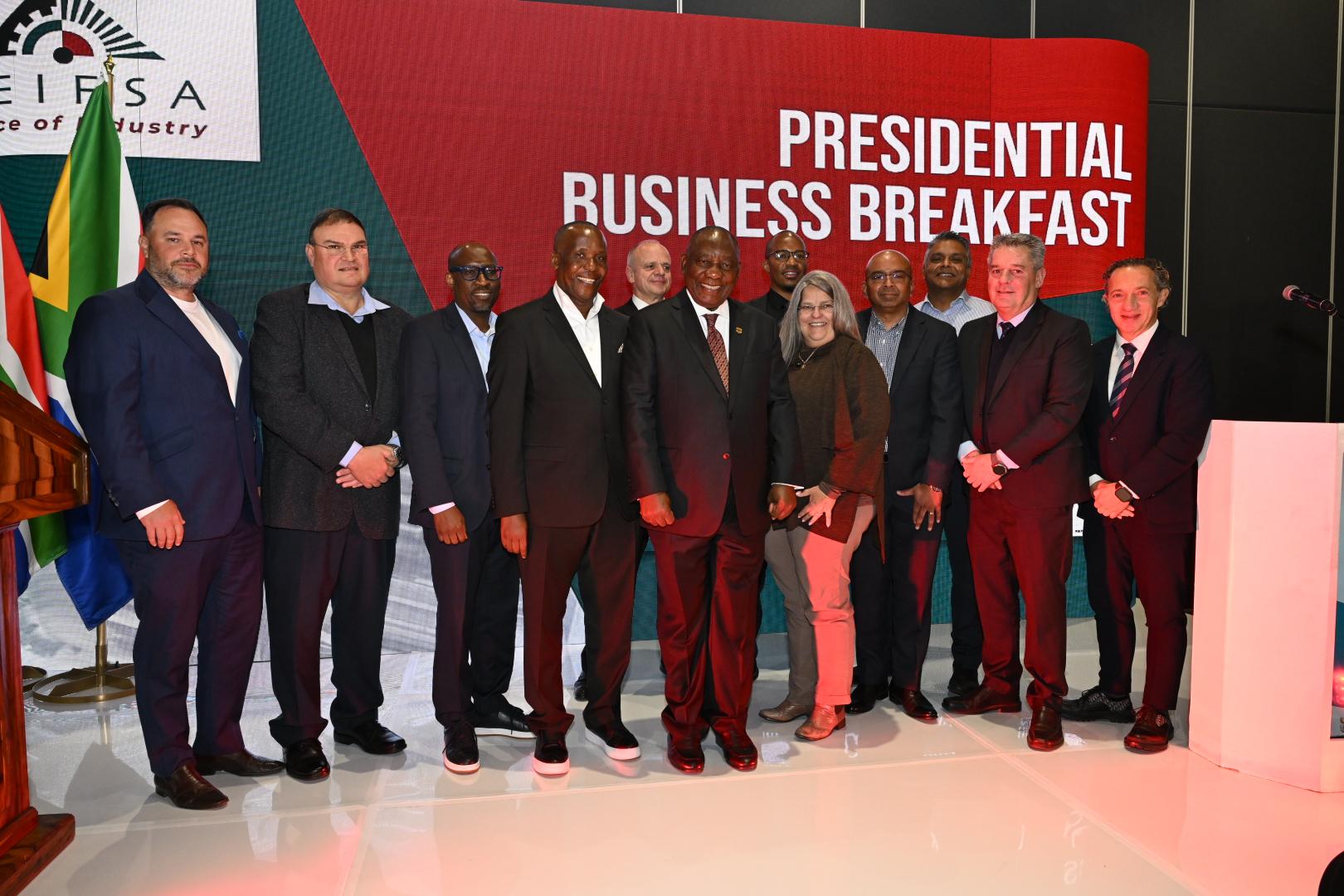
The metals and engineering sector is at the heart of South Africa’s industrial development, producing the transformers, cables, pumps, valves, boilers, fabricated steel, mining equipment and engineering systems required by a modern economy, President Cyril Ramaphosa told the Steel and Engineering Industries Federation of Southern Africa inaugural Presidential Breakfast on Thursday, 13 August.
“The companies represented here manufacture the machines that drive our mines, the structures that carry our electricity, the equipment that moves goods through our ports and railways, and the components that keep our factories operating,” he said at the event held at the Radisson Hotel and Convention Centre, Johannesburg, OR Tambo, and attended by SEIFSA’s business leaders and members.
He hailed the role of the metals and engineering sector in getting the economy back on track.
“Steel is a strategic industry. Without steel, there is no industrial economy.
“Supporting a competitive and sustainable steel industry is therefore a national priority.”
Tafadzwa Chibanguza, Chief Executive Officer of SEIFSA, welcomed the President’s comments in identifying the areas requiring accelerated reform — electricity, logistics, water and general municipal service delivery — and the central role that the industry can play in strengthening these important economic pillars.
Mervyn Naidoo, President of SEIFSA, said industrialisation had to be treated as a deliberate national choice, supported by policies and institutions that work together.
“The test is whether they produce real orders for domestic firms, reliable infrastructure, investment in productive capacity and sustainable jobs,” he said. “This requires clear accountability, coordination across Government and credible mechanisms through which implementation blockages can be identified, escalated and resolved.”
Elias Monage, Chairperson of the SEIFSA Board, said the business breakfast engagement formed part of a deliberate effort to keep open the channels of communication between the highest office in the land and the metals and engineering sector.
“Engagement at Presidential level gives strategic direction and impetus. It enables focused discussions with the relevant ministries and institutions in the economic cluster, where the detailed work of implementation must take place,” Monage said.
The event represented another milestone in SEIFSA’s regular engagement with national Government, aimed at ensuring that there is no gap between the country’s industrialisation ambitions and the reality experienced on the ground, Chibanguza said.
“These engagements close that feedback loop. This is the apex engagement and the start of our next round of discussions with the economic cluster ministries.”